
How to Remove Mineral Buildup From Blonde Hair
Table of Contents
Last Updated: September 29, 2026
Why Blonde Hair Turns Brassy When Minerals Build Up
Blonde hair turns brassy when minerals in your water bind to the hair shaft and oxidize, leaving behind yellow and orange tones. This mineral buildup is one of the most common complaints from clients who feel like their color shifts within days of leaving the chair.
Hard water carries dissolved calcium and magnesium. Those minerals attach to porous, lightened strands and stay there. Over time they build a film that dulls shine and warms up your tone.
Here's the part most guides skip: it's not just about washing. Every shower adds another thin layer. Left alone, that layer changes how your hair takes toner and how long your color lasts.
Signs of Mineral Buildup in Hair You Should Not Ignore
The clearest signs of mineral buildup in hair are dullness, rough texture, and a stubborn yellow tint that toners can't fix. If your blonde looks tired two weeks after a salon visit, minerals are a likely culprit.
Watch for these signals:
Hair feels stiff or straw-like even after conditioning
Color turns brassy faster than it used to
Shampoo won't lather well
Scalp feels itchy or tight after washing
Highlights look muddy instead of bright
A common mistake is treating these as damage and reaching for protein treatments. That often makes things worse. Mineral deposits and protein overload feel similar but need opposite fixes.
Watch Out Applying protein masks to hair that actually has mineral buildup can leave it brittle and prone to snapping. Test your water before you treat.
How to Test Your Water Hardness at Home
You can test your water hardness at home in under five minutes with a soap test, a test strip, or a look at your utility's annual water quality report. The goal is to get a number in grains per gallon (gpg) or milligrams per liter (mg/L, equivalent to parts per million) so you know whether minerals are actually the problem before you buy another product.
The soap test (free, rough): Fill a clear bottle with tap water, add a few drops of pure liquid castile or dish soap, and shake hard for 10 seconds. Soft water lathers into a thick, stable foam. Hard water stays cloudy with a thin, quick-collapsing lather. This tells you hard vs. soft but not how hard.
Test strips (about $10-$20 for a multi-pack at hardware stores or aquarium suppliers): Dip the strip in a cup of tap water for one second, shake off the excess, and wait the time listed on the package (usually 15-60 seconds). Match the color to the chart. Most strips report in gpg or mg/L.
How to read the number:
Result (gpg) | Result (mg/L or ppm) | Classification | What it means for blonde hair |
0-3.5 | 0-60 | Soft | Minimal mineral binding; standard clarifying is usually enough |
3.5-7 | 60-120 | Moderately hard | Buildup likely within 2-3 weeks; chelate monthly |
7-10.5 | 120-180 | Hard | Brassiness and dullness common; chelate every 2-3 weeks |
10.5-14 | 180-240 | Very hard | Aggressive buildup; consider a softener, not just a filter |
Above 14 | Above 240 | Extremely hard | Filters alone won't solve it; whole-home softening is the real fix |
These bands follow the widely used U.S.
Pro Tip Test both your shower and your kitchen tap. They usually match, but older homes with mixed plumbing sometimes don't, and the shower is the one that matters for your hair.
Step-by-Step: How to Remove Mineral Buildup From Blonde Hair
Removing mineral buildup from blonde hair takes three steps: clarify, chelate, then rehydrate. Skipping the last step is the mistake that leaves hair dry and brittle.

Step 1: Clarify With the Best Clarifying Shampoo for Hard Water
Start with the best clarifying shampoo for hard water you can find. Look for chelating agents like EDTA or phytic acid on the label. These bind to minerals so water can rinse them away.
Step 2: Apply a Chelating Treatment or Hair Detox Mask
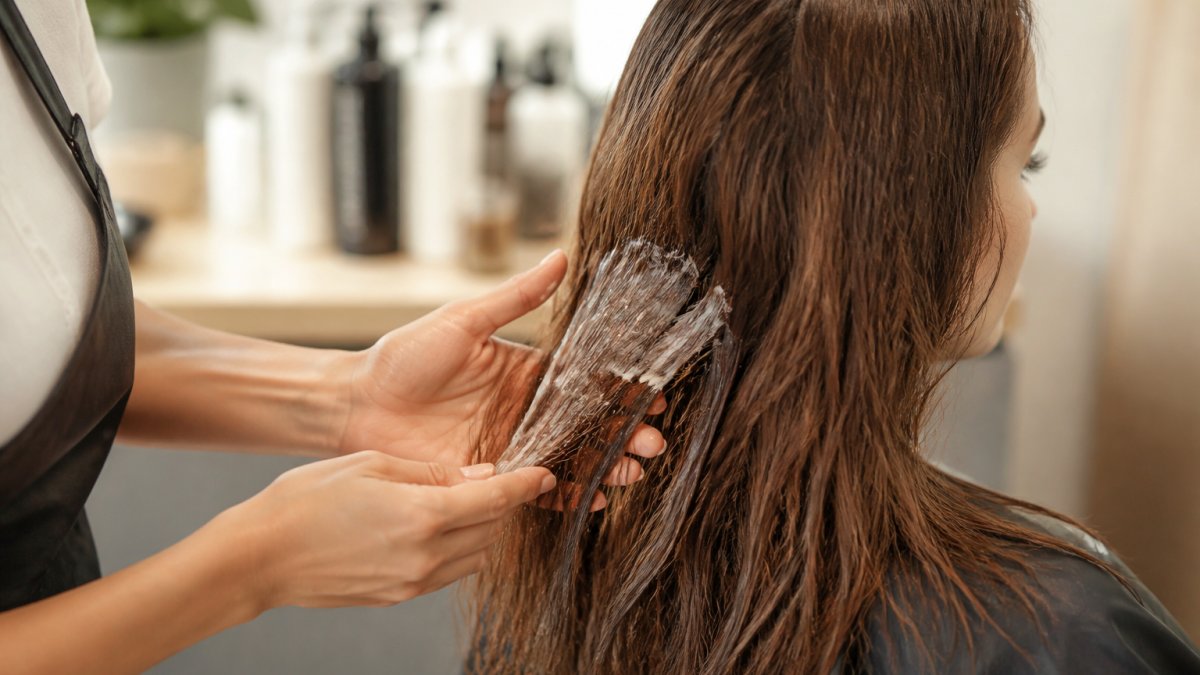
A chelating treatment goes deeper than shampoo. It targets calcium deposits and magnesium that have bonded to the cuticle.
Step 3: Restore Moisture Balance With a Nourishing Masque
Chelating leaves hair thirsty. A nourishing masque puts moisture back and helps the cuticle lie flat again.
Step | Product Type | Time | Frequency |
1 | Clarifying shampoo | 2-3 min | Every 2-4 weeks |
2 | Chelating treatment | 10-20 min | Every 4-6 weeks |
3 | Nourishing masque | 10 min | After every chelate |
How to Fix Brassy Blonde Hair at Home Without Damaging It
You can fix brassy blonde hair at home with a purple or blue toning shampoo, but timing matters. Leave it on too long and you risk a violet cast on porous strands.
DIY Natural Ingredient Safety: What Works and What Harms Blonde Hair
Most guides on this topic either push a product or repeat "try apple cider vinegar" without explaining why some kitchen ingredients help lightened hair and others quietly destroy it. The difference comes down to two things: pH and mechanism. Bleached hair has already had its cuticle lifted and its inner bonds broken, so it tolerates far less than virgin hair.
Safe when diluted and used briefly:
Apple cider vinegar (ACV) rinse. ACV is acidic (roughly pH 2-3 undiluted), and hair's ideal range is mildly acidic (around pH 4.5-5.5). A diluted rinse can help smooth the cuticle and add shine. Dilute 1 part ACV to 4-8 parts water, pour over hair after conditioning, leave 30-60 seconds, and rinse. Once a week is plenty. Undiluted or left on for minutes, it can dry porous strands.
Rice water. Contains starch and some amino acids. It's gentle and won't strip color, but it does not chelate minerals, it's a conditioning rinse, not a detox. Don't expect it to fix hard-water brassiness.
Aloe vera gel. Soothing and moisturizing. Safe as a pre-wash or mixed into a mask. No mineral-removal power.
Risky, works for some, damages others:
Lemon juice. This is the one most often recommended and most often regretted. Lemon juice is acidic and, in sunlight, can lighten hair slightly through oxidation. But on bleached hair it strips moisture, roughens the cuticle, and can trigger breakage. It does not chelate calcium or magnesium. If you use it at all, dilute heavily and keep it out of the sun, but for lightened blonde, skip it.
Baking soda. Frequently suggested as a "natural clarifier." It's the opposite of what blonde hair needs. Baking soda is alkaline (around pH 8-9), which raises the hair's pH, lifts the cuticle, and makes the shaft feel rough and tangle-prone. It also doesn't bind minerals. Skip it.
Club soda or sparkling water. A popular internet fix. The carbonation is mildly acidic and can add temporary shine, but the mineral content varies by brand and it won't remove existing deposits.
Never on lightened hair:
Undiluted vinegar or lemon juice left on for extended periods. Both can cause chemical burns to the scalp and severe dryness.
Hydrogen peroxide or "sun-in" style lighteners. These further oxidize already-lightened hair and compound damage.
Any abrasive scrub (salt, sugar, baking soda paste) massaged into the scalp. Micro-abrasion on a compromised cuticle accelerates breakage.
Watch Out If your hair feels gummy, stretchy, or snaps when wet after a DIY treatment, stop and book a professional assessment. That's a sign of compromised bonds, not buildup, and the fix is the opposite of another clarifying rinse.
Key Takeaway DIY rinses are for shine and surface conditioning. Mineral removal is a chelation job, and on bleached blonde, the safest chelators are formulated products, not kitchen ingredients.
Preventing Mineral Buildup: Shower Filters, Water Softeners, and Maintenance
Prevention comes down to your water. A shower filter or water softener can cut mineral exposure at the source.
Maintenance habits matter too:
Rinse with cool water to close the cuticle
Use a leave-in conditioner for extra protection
Clarify on a schedule instead of waiting for brassiness
Book a professional gloss or toner every six to eight weeks
Conclusion
Hard water is the quiet reason so many blondes go brassy fast. Testing your water, clarifying on a schedule, and restoring moisture after every treatment will keep your color brighter for longer.
Frequently Asked Questions
How do I know if I have mineral buildup in my blonde hair?
Key signs include dullness, brassy or yellow discoloration, rough texture, tangles that worsen over time, and color that fades faster than expected. If your hair feels coated even after washing, or your usual products stop working, mineral deposits from hard water are likely the cause. A simple water hardness test kit or a quick look at your showerhead for white scale can confirm the source.
Does hard water cause blonde hair to turn brassy?
Yes. Hard water contains calcium and magnesium, which bind to the hair cuticle and oxidize, creating the yellow-orange tones known as brassiness. These minerals also lift the cuticle, letting color escape and making bleached or color-treated hair look dull faster. Using a chelating shampoo or installing a shower filter reduces how much buildup reaches your strands in the first place.
Can I use apple cider vinegar to remove mineral buildup from hair?
Apple cider vinegar can help smooth the cuticle and add shine, but it does not chelate minerals the way a dedicated clarifying or chelating shampoo does. It is best used as a rinse after shampooing, diluted one part vinegar to three parts water. If your blonde hair is very dry or damaged, test on a small section first, since the acidity can be harsh on porous strands.
Will a shower head filter help prevent mineral buildup on blonde hair?
A shower filter removes some chlorine, sediment, and trace metals, which helps slow buildup and protect color. It will not soften water the way a whole-home water softener does, so calcium and magnesium can still reach your hair. Pair a filter with a clarifying shampoo routine every two to three weeks for the best results on blonde or bleached hair.
Comments